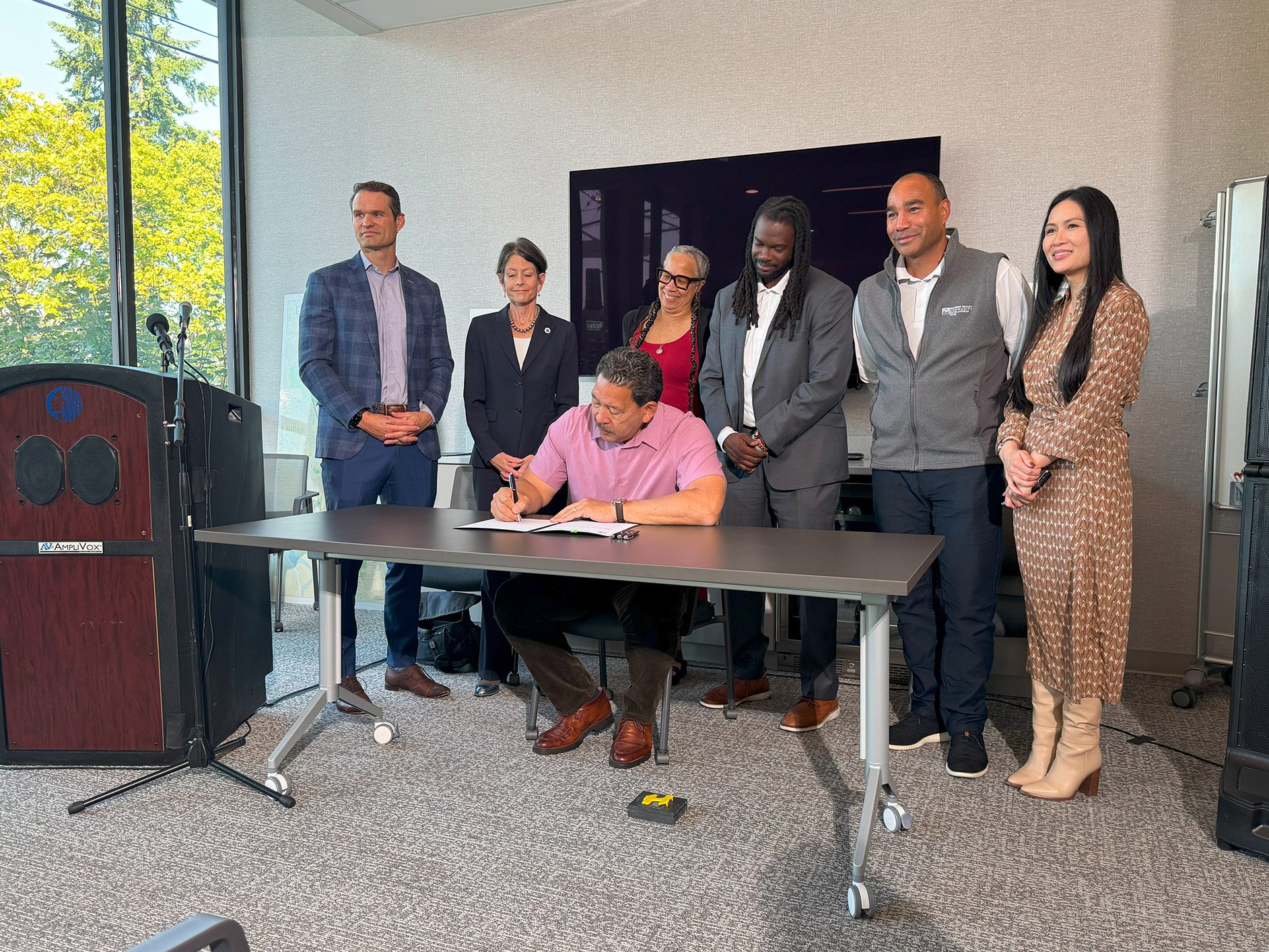
Seattle’s small businesses are the vibrant core of our neighborhoods and a crucial engine for our local economy. We are committed to listening to the needs of business owners and taking action to support them. Recent initiatives, announced by Mayor Bruce Harrell, demonstrate our dedication to cutting red tape, reducing costs, and fueling a robust recovery for businesses across the city.
“We listened to what small businesses need right now and we have delivered results,” said Director Markham McIntyre. “There’s more to do, but this package demonstrates that we are listening and we are acting.”
These efforts are a direct result of our conversations with business owners, the members of the Small Business Policy Group, and City of Seattle partners across multiple departments. They represent a significant step toward reducing time, cost, and struggle for small businesses to open and grow.
Making a direct impact: the Back to Business Program
The Back to Business Program provides direct financial support and resources to small businesses. Understanding the ongoing challenges businesses face, from operational costs to unexpected setbacks like vandalism, Mayor Harrell proposed $5 million in funding over the next two years. This investment will expand our ability to offer grants and preventative resources, giving businesses the stability they need to grow.
Our office designed this program to be responsive and tailored to the unique needs of Seattle’s diverse business community. It’s more than just a funding source, it’s a partnership. We connect business owners with the tools and support necessary to overcome hurdles and achieve their goals. By investing directly in our local businesses, we are investing in the health and vitality of our neighborhoods.
Cutting red tape with permitting reform
We consistently hear from the business community that navigating the City’s permitting process can be a major obstacle. The time, complexity, and cost involved can stifle growth before a business even opens its doors. That’s why permitting reform is a top priority for City leadership.
The new Permitting Accountability and Customer Trust Executive Order aims to create faster, clearer, and more predictable processes. Key features developed include:
- An online multi-language guide. We are breaking down language barriers to ensure all entrepreneurs can access clear instructions and resources.
- An AI-powered pilot tool. This innovative tool helps applicants avoid common errors on their forms, significantly reducing processing times and back-and-forth with city departments.
- Reduced timelines for vacant spaces. New legislation the timeline and cuts costs for businesses looking to lease long-vacant commercial spaces, helping to activate empty storefronts and revitalize commercial districts.
Leah Martin, a partner and architect at Allied8, emphasized the significance of these changes. Her firm designs affordable homeownership projects. “As a small business that designs and develops missing middle affordable homeownership projects, this executive order will empower us and other small businesses like ours,” she said. “It will give a voice to small businesses dedicated to the making of affordable housing.”
Rewriting the rules on business taxes
High tax burdens can place a significant strain on small- and medium-sized businesses. Tax reform eases this pressure and allows entrepreneurs to reinvest in their companies, employees, and communities.
A proposal to rewrite the City’s Business and Occupation (B&O) tax code is on the November ballot. If passed, this change would have a massive impact, eliminating or significantly reducing the tax burden for approximately 90% of Seattle’s small- and medium-sized businesses. This reform is designed to create a more equitable system where the smallest businesses can keep more of their hard-earned revenue.
This isn’t just about tax relief, it’s about creating a more competitive and sustainable business environment. By lowering the financial barriers to entry and operation, we empower more entrepreneurs to launch their ventures and contribute to Seattle’s dynamic economy.
A unified vision for Seattle’s economy
These initiatives are not happening in a vacuum. They are part of a coordinated strategy between our office, City departments, the Mayor’s Office, and the City Council to build a stronger, more resilient Seattle.
“Small businesses are at a tipping point for survival in Seattle for multiple reasons. Our small businesses define our city’s character – they shape our neighborhoods, power our economy, and reflect and enhance our culture. The City needs to act to ensure small businesses survive and thrive,” said Director McIntyre.
This sentiment is shared by partners like Council President Sara Nelson, who noted, “This package of reforms and critical investment shows our urgent commitment to supporting local businesses.”
Visit our website to learn more about the resources available to you, from financing and technical assistance to navigating City regulations.