Our core purpose is leading projects and making investments that open up access to economic opportunities, reduce the racial wealth gap, and encourage innovation and growth. One area where we focus is the real estate continuum, from pop-ups, to sustaining and growing existing businesses, to models for asset ownership.
Our Tenant Improvement Program addresses the middle part of the continuum by reducing costs for small businesses to upgrade their commercial spaces. These investments help businesses stabilize and grow by purchasing essential equipment, completing electrical upgrades, or building out a new storefront.
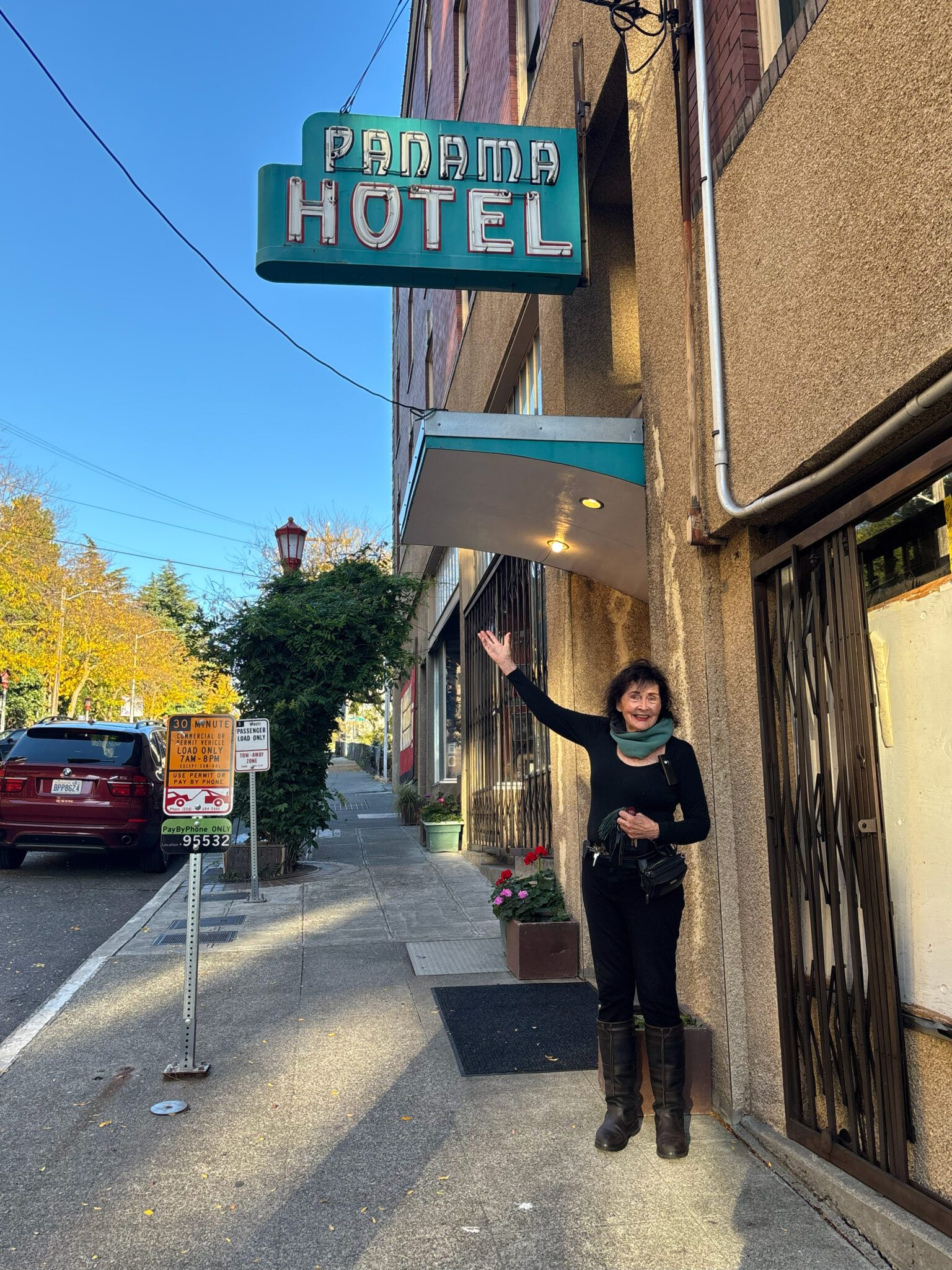
The Panama Hotel in Japantown, a piece of Seattle history, illustrates the impact these investments can have.
Open and operating since 1910, the building tells the story of the neighborhood and its residents throughout the years. Visitors are greeted with original woodwork and subway tiles lining the stairs, with natural sunlight pouring in. The mezzanine level – now guest rooms – used to house businesses like a tailor, a dentist, and even the home of the Seattle Photography Club. It also houses the last intact Japanese-style public bathhouse in North America.
The keeper of this history? Jan Johnson.
“I bought the Panama Hotel in 1985 to save it for history and education,” said Johnson, owner and operator of the hotel.
The Panama Hotel was designed by Sabro Ozasa, the first Japanese architect in Seattle. It originally operated as a hotel for single Japanese men seeking work in America. It remained open during WWII, even opening its basement as storage for neighbors to store their belongings when the Japanese community was forced to relocate to internment camps. The belongings left behind are now visible from the first-floor tearoom, serving as just one of the pieces of history visitors see in this living museum.
Johnson, the third person to own the building, never planned to run her own business. Home from visiting Rome, she bumped into then-owner Takashi Hori who told her he was selling the building.

“And I thought, ‘oh no, then it’s all going to be gone now,’” she said. “So I told him I wanted to buy it.” Hori told Johnson he already had “seven bona fide offers.” She made an offer anyways. Johnson started working alongside the Horis, helping with anything and everything. Finally, Mr. Hori said he would sell her the hotel.
Not only did Johnson have no experience in business, let alone buying a business, she had no credit. After struggling to find a bank to help her with the purchase, she found someone willing to give her a business loan. When filling out the paperwork, Johnson had a one-sentence answer to explain why she wanted to buy the Panama Hotel: “I want to show that this is still Japantown.”
Her explanation worked. While finalizing the details, the loan lender told Johnson she must be special, “because for about the last 14 years, people have been knocking down the door to buy that building and they chose you.”
One hundred and fifteen years later, much of the building looks like it did when it opened. That’s due to Johnson’s tireless efforts to preserve the building, including the double hung windows.
“When it was built, electricity and air conditioning wasn’t invented. Sabro built it with east-west air, that’s why the double hung windows are so big,” said Johnson.
As the windows started to age and stopped working, it became a problem. She said she was embarrassed when she’d have to stick carboard in the window or they just didn’t work. “It doesn’t represent the building well,” she said.
She heard about the Tenant Improvement Program and attended an information session. Our TI Program helps small businesses reduce the financial burden needed to make commercial space improvements. Johnson applied and received a forgivable loan of $100,000 to restore the windows on the western side of the building.
“Funding projects like the Panama Hotel is crucial due to its intergenerational significance in Japantown. Jan fosters connections among those who have memories or curiosity about the Panama,” said Jenn Charoni, Community Development Specialist. “Our TI Program supports basic infrastructure for businesses, so owners can focus on growth. In this case, new windows mean more rentable rooms and a better guest experience, encouraging returns and word-of-mouth referrals.”
“It gives the building more credibility. It’s not just an old building, it’s a functioning old building,” said Johnson.
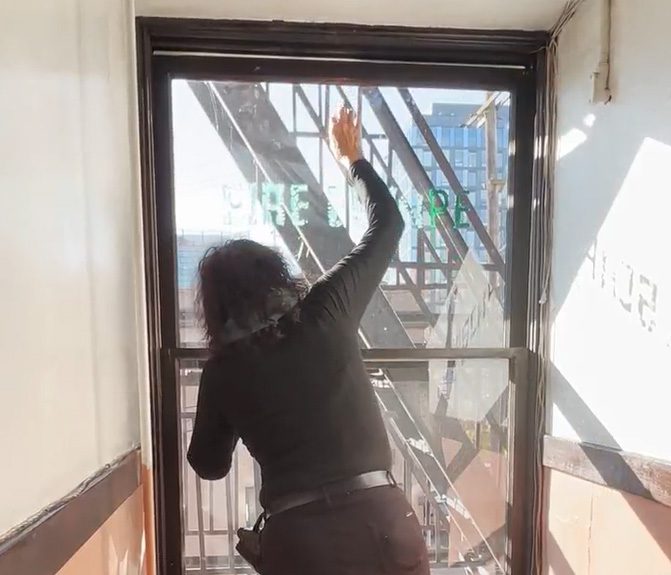
Now Johnson is working to update the rest of the windows. She’s secured another grant from another organization and will see how many more of the windows she can restore. Even though it’s still a work in progress, Johnson is thrilled to have the original windows working again.
“It makes my heart sing every time I go to the windows,” she said. “I want to go look at those windows, check them to see that they’re all closed and fitting in the right space, see if they need anything, because I want to keep them for a long time now – another 100 years.”
Restoring the Panama Hotel windows is just one of the ways the TI Program helps businesses grow. Since its launch in 2022, we’ve invested more than $6.7 million in 120 businesses through this program. These investments allow small businesses to streamline processes, invest in better equipment, and expand their business through new offerings – allowing them to thrive and enrich the Seattle’s neighborhoods. See a list of 2025 Tenant Improvement awardees here.
The Office of Economic Development’s purpose is to shape the Future of Seattle’s Economy and make it more equitable, prosperous, and competitive. We do this work by leading projects and making investments that open up access to economic opportunities, reduce the racial wealth gap, and encourage innovation and growth. A pillar of FSE is building BIPOC community wealth. The Tenant Improvement Program is one of the innovative ways we’re fighting displacement and removing barriers to opportunities for small business owners. Through the TI Program, we’re helping entrepreneurs grow their businesses and strengthen their communities.